When founders evaluate office space in Jakarta, community spaces rarely make the top of the checklist. Internet speed, lease flexibility, location — yes. Whether the building has a proper canteen, a lounge where people actually want to spend time, or social areas that bring teams together — usually an afterthought.
That’s a miscalculation. And it shows up in team performance data before it shows up in any survey.
Community spaces in an office aren’t a culture perk reserved for tech companies with unlimited budgets. They’re an operational feature that directly affects how your team functions, how long they stay, and how much discretionary effort they bring to work every day. Here’s why — and what it looks like in practice.
The Business Case for Community Space in a Jakarta Office
The logic is straightforward once you frame it correctly.
Your team spends 8–10 hours a day in your office. During that time, they’re not just completing tasks — they’re forming relationships, building trust, calibrating their sense of belonging, and deciding, continuously, how invested they are in the organization they work for.
Community spaces are the infrastructure that supports all of that. Without them, those processes still happen — they just happen less effectively, less frequently, and with more friction. With them, you’re actively compressing the timeline for team cohesion, reducing the social isolation that drives quiet disengagement, and creating the conditions where people do their best collaborative work.
In Jakarta’s talent market, where replacing a senior employee costs significantly more than retaining one, this isn’t a soft benefit. It has a hard business value.
What Community Spaces Actually Do — by Type
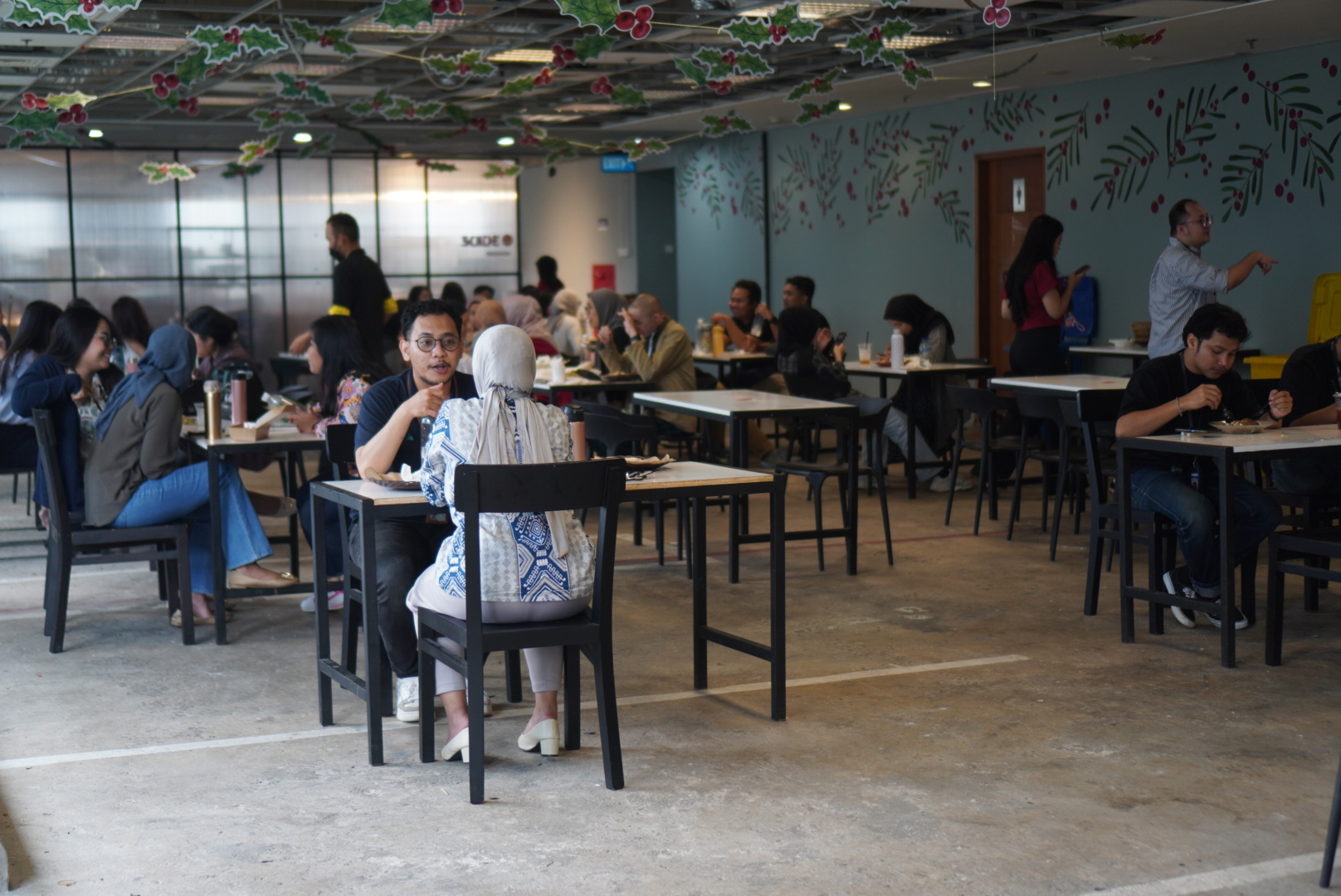
Employee canteen and food areas Shared meal time is one of the oldest and most effective mechanisms for building social trust. When employees eat together — not at their desks, not ordering delivery to separate corners of the office — they have the informal conversations that build relationships across teams and seniority levels.
A quality employee canteen in a Jakarta office reduces the time and energy spent on daily food logistics, keeps people on-site and present rather than scattered across the surrounding area during lunch, and creates a daily touchpoint for cross-team interaction that no amount of structured team-building can replicate.
Lounges and informal gathering areas The conversations that happen between meetings — in hallways, near coffee stations, in break areas — are frequently where the most important decisions get made informally. A well-designed lounge creates intentional space for these interactions rather than leaving them to chance.
For Jakarta offices specifically, where open-plan layouts can mean constant noise or constant distraction, a designated lounge gives people a place to decompress, recharge, and reconnect without disrupting the work environment around them.
Collaborative zones and flexible spaces Beyond informal social space, community areas designed for collaboration — writable walls, flexible furniture, screens for informal presentations — reduce the barrier to spontaneous problem-solving. When the friction of booking a formal meeting room is removed, more ideas surface earlier, more often.
This matters most for teams in product, strategy, or any function where iteration speed depends on how quickly people can get in the same room and think through a problem together.
Why This Matters More in Jakarta Than in Most Cities
Jakarta’s commute realities are well-documented. For many employees, getting to work is already a significant daily investment of time and energy. An office that, once they arrive, offers nothing beyond a desk and a task list is a harder sell every morning — especially when the alternative of working from home becomes increasingly viable.
Community spaces change the calculus. They give people concrete, daily reasons to be physically present — not because they’re mandated, but because the office experience is genuinely better than the alternative.
For C-level leaders trying to rebuild office culture after the hybrid work shift, this is one of the most practical levers available. You can’t mandate presence without cost. But you can make presence worth choosing.
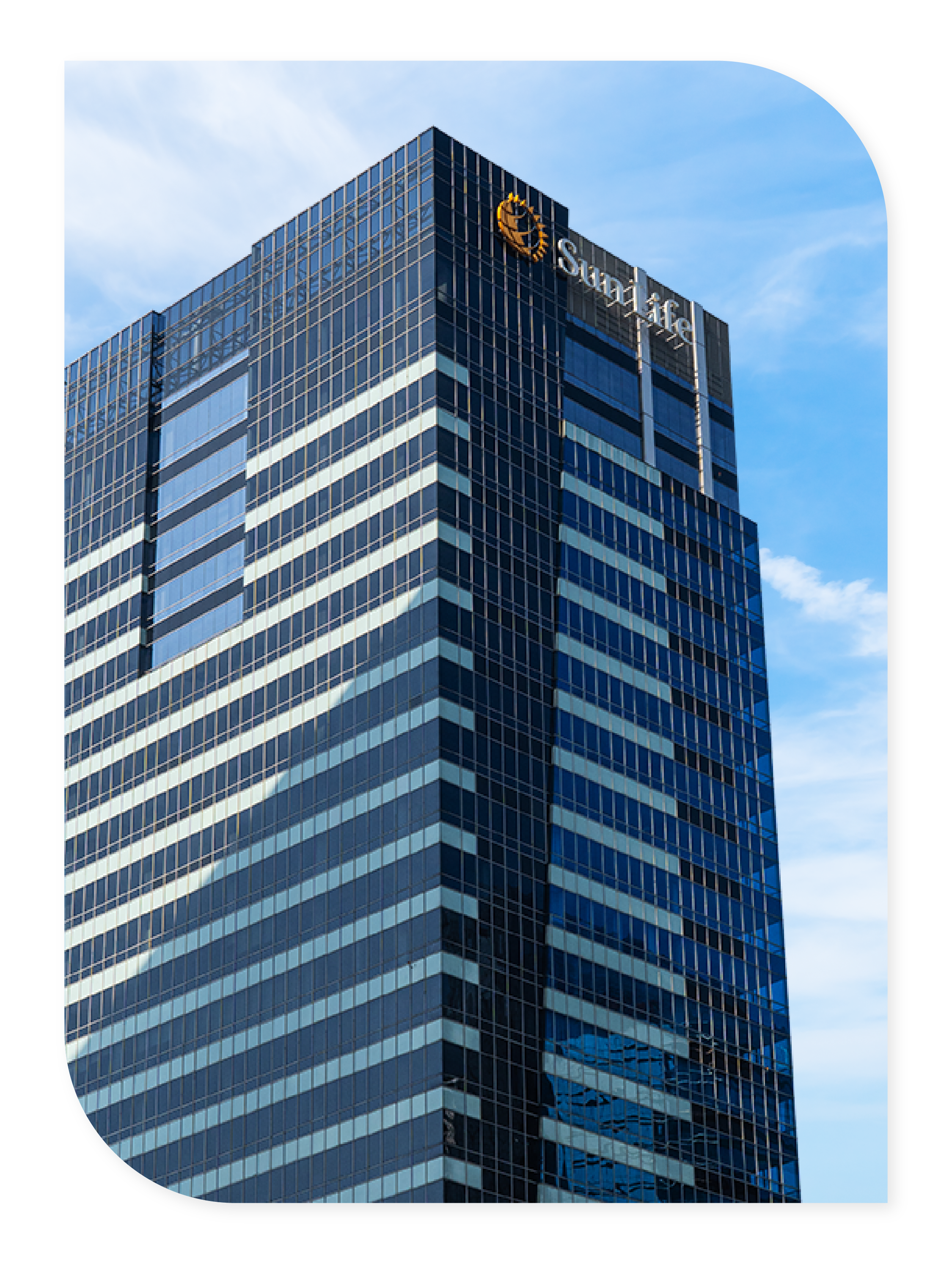
Menara Sun Life: Community Spaces Built Into the Office Experience
Menara Sun Life integrates community space into the office environment as a standard feature — not an optional upgrade.
What this means for your team:
- On-site food and canteen facilities that keep your team present, fed, and connected during the workday — reducing the daily logistics friction that fragments team time
- Lounge and social areas designed for the informal interactions that build genuine workplace relationships over time
- Kreador Coworking Space — an active professional community within the same building that extends the social and networking value beyond your immediate team
- Event facilities that make it easy to activate your community space with programming: lunch-and-learns, industry events, team gatherings — without needing an external venue
- Supporting amenities — parking, reliable infrastructure, security — that ensure the experience of being in the building is frictionless from arrival to departure
For founders choosing office space in Jakarta, Menara Sun Life offers an environment where community space is built in — not bolted on.
Evaluating Community Space When Choosing an Office in Jakarta
Before signing an office lease in Jakarta, ask these questions about the community space offering:
Is the canteen or food facility actually usable? Quality, variety, and seating capacity matter — a technically present canteen that nobody uses doesn’t deliver the value.
Are the social areas designed for use, or for photos? The difference between a lounge people actually spend time in and one that sits empty is almost entirely in the design: furniture comfort, acoustic separation, proximity to natural light.
Is there programming that activates the space? Physical space without activation is just square meters. Events, regular gatherings, and structured programming are what turn community space into actual community.
Does the surrounding building support community beyond your team? An office building with an active professional ecosystem — like Kreador at Menara Sun Life — extends the community benefit beyond your headcount.
The right answers to these questions separate a genuinely people-friendly Jakarta office from one that just has the right words in the brochure.
Ready to see Menara Sun Life’s community spaces in person? Schedule a visit and explore what the environment offers your team. [Contact our team →]